The Alibi in Your Pocket: Six UK Cases Where Digital Traces Moved the Clock
There is a particular kind of modern alibi that arrives not from a mate down the pub but from a phone. In 2026, fitness apps, mapping histories and health dashboards are routine witnesses in UK investigations. They can support a timeline, undermine a statement or simply add another thread to a case that already has too many. Armchair detectives love a digital trail. The trouble is that a trail is not a verdict.
This is a listicle with a health warning. The six patterns below are drawn from UK cases and trials reported over the past decade. Identifying details have been trimmed: the point is how the evidence works, not who was in the dock. Names are omitted because digital evidence is easy to overclaim and because some of the families involved have had enough noise.
The 5am run that never left the house
A suspect told police he had been out running when a crime was committed. His Strava account showed a route, a time and a pace that seemed to fit. Investigators then looked at the phone itself. The activity had been uploaded manually, not recorded live. The GPS trace was patchy, the cadence data was missing and the phone's health dashboard showed no meaningful movement in the relevant window. The alibi was not a telemetry record. It was a claim with a map attached.
The lesson is simple: a manual upload is not the same as an automatic recording. Strava, Garmin and similar platforms let users add activities by hand. A screenshot of a route can be a statement, not a sensor.
The Google Maps timeline that moved a car
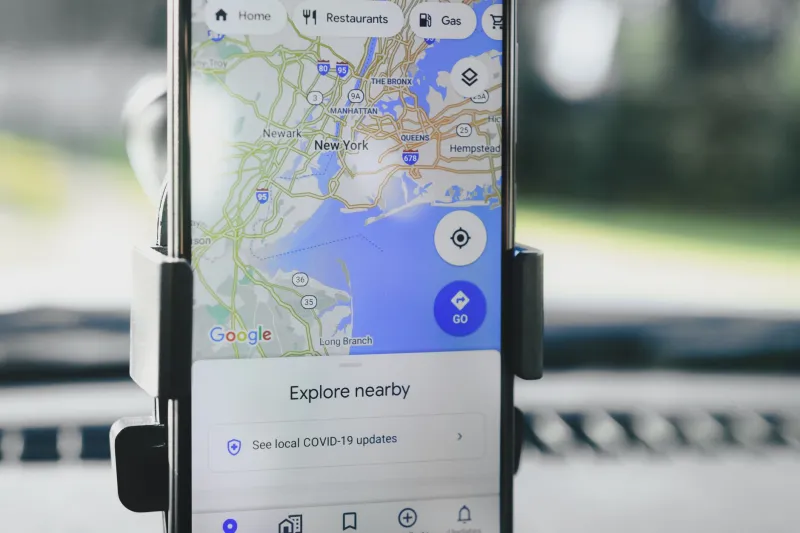
Location history has been used in UK investigations for years. In one pattern that has repeated in different forms, a phone's Timeline placed it near a location at a key moment, while a vehicle's ANPR record put the car somewhere else. That does not automatically mean the phone was lying. It may have been in a different car, left at home, or handed to someone else.
Google has also changed how Timeline works and where the data is stored. Investigators and armchair sleuths alike need to know which version of the service was in use, what settings were on, and whether the record was generated automatically or edited later. A timeline is a clue about a device. It is not a personality test.
The sleep app that contradicted a statement
Phone health data has become a quiet regular in court bundles. Sleep tracking, step counts and screen-lock events can suggest when a handset was still, when it was picked up and how long it stayed unused. In one UK case pattern, a health app's sleep window sat awkwardly beside an account of a late-night journey.
But sleep apps are not medical-grade witnesses. A phone can be left on a bedside table while its owner is elsewhere. A shared device can record someone else's night. A software update can wipe or rewrite patterns. The data can corroborate. It rarely proves identity on its own.
The Strava segment that became a witness
Public segment leaderboards are a gift to anyone who likes exact times. A cyclist's upload can place an account on a road at a precise minute. In one case pattern, a fitness upload helped confirm that a person was on a route when they said they were — useful for corroboration rather than prosecution.
The flip side is that GPS drifts, privacy zones blur start and end points, and e-bikes can be uploaded as rides. A segment time is a data point about an account and a device. It is not a sworn statement from the rider.
The step counter that counted someone else
Step counts look beautifully simple. They are not. A phone in a pocket, a watch on a wrist, a device left in a bag and a shared family account can all produce different pictures. In one pattern, a step count was used to suggest a person had been active when they claimed to be asleep. The defence pointed out that the handset had been in a child's bag for part of the day.
The evidential question is not just what the sensor recorded. It is who was carrying the sensor, whether the account was personal, and whether the data was synced promptly or uploaded later.
The significant locations that filled a gap
Smartphones build patterns. Apple and Google both offer location features that learn regular places — home, work, a gym, a relative's house. These can help investigators fill gaps in a timeline or test a story about a routine.
They can also be wrong. A significant location may be a cluster of cell towers rather than a precise address. A phone may learn a place because it was left there once. A person may share a device or a login. The pattern is a prompt for further inquiry, not a conclusion.
Where speculation ends and evidence begins
The hard part of digital evidence is attribution. A phone was at a location. An account uploaded a run. A health app recorded a quiet night. None of those facts, on their own, tell you who was holding the device or why. UK courts have become more alert to that gap. Expert evidence must be reliable, disclosure must be fair, and the defence is entitled to test how data was extracted and preserved.
The Post Office Horizon scandal is the obvious cautionary tale about treating computer output as gospel. Digital forensics is better than vibes, but it is not magic. The Forensic Science Regulator's standards, CPS guidance on digital evidence and the ordinary rules of disclosure all exist because data can mislead as easily as it can reveal.
A checklist for responsible armchair detectives
- Ask whether the data was recorded automatically or entered by hand.
- Check the time zone, sync delay and software version.
- Separate the device from the person. Who was carrying it?
- Look for corroboration before building a theory.
- Do not publish names, addresses or unverified allegations.
- Send information to the police or Crimestoppers, not to a viral thread.
Digital footprints are useful because they are mundane. They record the boring bits of life — the run, the drive, the sleepless night. That is also why they are dangerous. A timeline can look like a confession when it is only a phone doing what phones do. In 2026, the best armchair detectives will be the ones who know when to stop reading the data and start asking who was holding the handset.