The Cousin in the Database: Forensic Genealogy and the Slow Reopening of Britain's Cold Cases
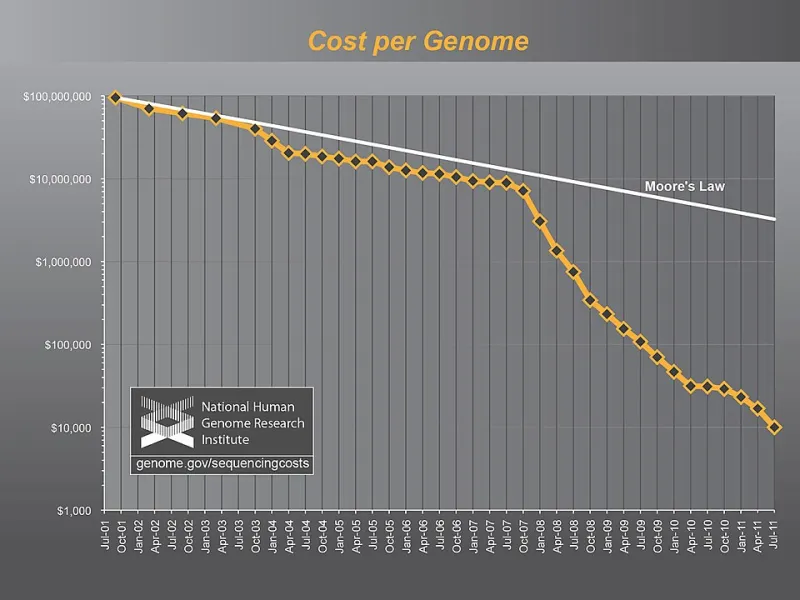
Photo: Wetterstrand KA, Public domain, via Wikimedia Commons
There is a scene that appears in almost every true-crime documentary about genetic genealogy. A scientist frowns at a screen, a spreadsheet fills with names, and then a single match appears in green. Cue the music. Cut to the arrest.
The real version is slower, messier and considerably more interesting. And in Britain, it comes with a set of legal and ethical constraints that make the American version look like the Wild West.
What forensic genetic genealogy actually involves
Most people assume it's a database search: put the crime scene DNA in, get a name out. It isn't. The process starts with a DNA profile recovered from a scene or an item — often degraded, often partial — which is then developed into a much richer profile using single nucleotide polymorphism testing. That profile is uploaded to a database where people have opted in to sharing, and the system looks for relatives rather than matches.
What comes back is usually a second or third cousin. From there, investigators build family trees backwards and forwards, using birth, marriage and death records, until the branches narrow to a small pool of candidates. Conventional detective work then takes over: alibis, vehicles, phone records, interviews. The DNA points at a family; the paperwork points at a person.
Why the UK does it differently
The United States has a culture of public genetic databases, court orders, and a sprawling commercial ecosystem. Britain has the National DNA Database, which is a different animal entirely — restricted, governed by statute, and not open to the kind of third-party genealogy searching that produced the breakthroughs in America.
UK forces have used genetic genealogy in a limited number of reviews, generally through internationally hosted, opt-in platforms, and each case tends to be scrutinised closely. The oversight landscape is crowded: the Information Commissioner's Office, the Biometrics and Forensics Ethics Group, forensic science regulators, and forces' own legal teams all have a say.
There is also a very British argument that runs through all of this. Uploading a crime scene profile to a consumer platform means the genetic data of people who never consented — the relatives — becomes part of a police inquiry. That isn't a technicality. It is the whole debate.
What 2026 looks like on the ground
Cold case units are under pressure and underfunded, and genetic genealogy is expensive. The testing, the genealogists, the tree-building hours and the follow-up investigation can run into tens of thousands of pounds per case, and many forces simply don't have it.
Where the technique is being revisited, it tends to be in long-unsolved cases where there is a decent DNA profile and a genuine public interest in resolution. Improvements in sequencing mean more degraded samples are viable than a decade ago, but labs still need accreditation and capacity, and the queue is not short.
The honest position is that this is a growing tool, not a magic wand. It works best when it is one strand of an investigation, not the entire plan.
What the documentaries get wrong
Three things, mostly.
First, compression. A documentary has ninety minutes. Tree-building can take months, with entire branches collapsing when a record turns out to be the wrong John Smith in the wrong county.
Second, the eureka problem. Programmes love a single match moment. In reality, the match is often the beginning of the difficult part, and a surprising number of leads go nowhere at all.
Third, the certainty problem. A genetic proximity is not an identification. A cousin match narrows a pool; it doesn't name a culprit. Any documentary that skips that distinction is selling you a feeling rather than a fact.
The ethical knot nobody wants to untangle
If your second cousin uploads a DNA kit for a Christmas present, you have effectively become searchable too, without ever making a choice. That is the discomfort at the heart of this technique, and it doesn't go away because the case is serious.
There are also practical worries: data breaches, changes of ownership at consumer testing companies, the possibility of a database being sold or repurposed, and the question of how long a police-uploaded profile should remain online. None of these are hypothetical. All of them are live arguments in forensic policy circles.
And there is the oldest worry of all: misidentification. Family trees are built from records, and records contain errors. A wrongly transcribed birth certificate two generations back can point an investigation at entirely the wrong family.
What armchair detectives should take away
- A genetic lead is not a solved case. It is a lead. Say so, every time.
- Don't name candidates. People investigated and eliminated have a right to their lives back.
- Understand the difference between a match and a relative. A database hit can be a cousin, a half-sibling, or a data error.
- Follow the conventional evidence. If a documentary only shows the DNA and skips the alibi work, it is hiding half the story.
- Check the jurisdiction. What is routine in one country may be unlawful or unheard of in another. British rules are not American rules.
- Be sceptical of timelines. Real cases take years; programmes take an hour.
The long game
Cold cases are not solved by technology alone. They are solved by someone deciding, years after everyone else moved on, to look again — and by institutions that keep evidence intact long enough for the science to catch up.
Genetic genealogy is genuinely extraordinary. It has given families answers they had been told they would never get. But it is a tool that works best in quiet rooms with careful people, not in a trailer with dramatic music. The armchair detective's job is to understand the difference, and to resist the urge to turn a family tree into a verdict.
That's the version worth watching. It just doesn't make for a very good cliffhanger.