Missed Connections: Six Disappearances Where Britain's Timetables Became the Star Witness
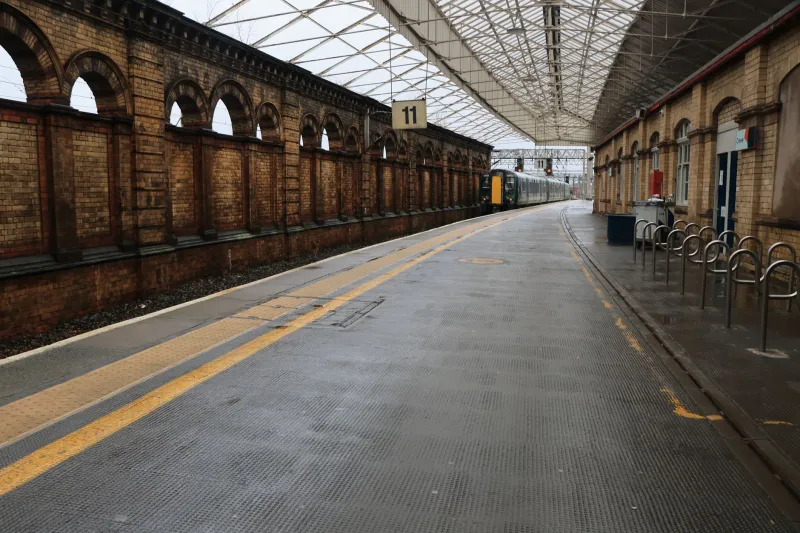
There is a specific kind of unease that comes from a departure board. Everything on it is on time, everything is accounted for, and yet someone who should have been standing on that platform never arrived anywhere. Britain's transport network is a giant, obsessive record-keeper, and when a person vanishes, those records often become the spine of the timeline.
This isn't a list of solved mysteries. It's a list of lessons, drawn from cases and case types where timetables, tickets and cameras did the talking — and where the armchair detective needs to tread more carefully than the documentaries suggest.
Why a timetable makes such a reliable witness
Schedules are boring, and boring is exactly what you want. A rail operator logs every service, every delay, every cancellation. Ticket gates stamp entries. Contactless readers record taps. Bus operators run automatic vehicle location systems that know where a vehicle was at 14:07 and whether it was three minutes late. None of that machinery cares about drama. It just records.
The catch is that the same machinery is patchy, inconsistent and often deleted within weeks. CCTV retention on the railways is typically measured in weeks, not years. Bus operators vary wildly. So the first question in any transport-based timeline is not 'what does the camera show?' but 'what still exists, who kept it, and for how long?'
1. The one-way ticket
The most cited example in Britain is the disappearance of Andrew Gosden, who was 14 when he left his home in Doncaster in September 2007 and was later confirmed on CCTV at King's Cross in London. He had withdrawn money and bought a one-way ticket. Those facts are public, confirmed and repeatedly reported.
What they are not is a motive. A one-way ticket tells you someone bought a single. It does not tell you whether they intended never to come back, whether they were meeting someone, or whether they had already planned a return by other means. Armchair detectives routinely skip that distinction, and it is the single most common error in transport-based theorising.
2. The camera gap
Station CCTV is not a Netflix drama. It is a patchwork of cameras with different angles, different frame rates and, crucially, different clocks. A camera in a ticket hall and a camera on a platform can disagree by several minutes, which is enough to invent a phantom connection or erase a real one.
When a case is discussed online, ask which camera produced which timestamp, whether the clock was checked against a reliable source, and whether the footage is continuous or motion-triggered. A gap in the record is not the same as a gap in reality.
3. The bus route nobody checks
Rail gets the attention; rural buses quietly solve timelines. A person last seen at a bus stop may have boarded a service that only runs on schooldays, or a route that was diverted for roadworks that week, or a 'ghost timetable' still displayed on a shelter years after the operator changed it.
Before you build a theory on a bus that 'must' have come, check the operator's actual timetable for that specific date. Bank holidays, strike days, engineering works and seasonal reductions all rewrite the script.
4. The tap that never registered
Contactless and Oyster records are gold, but they are not a diary. A tap-in without a tap-out produces an incomplete journey, not a confirmed destination. A passenger can be charged a maximum fare for a journey they never finished. Fare evasion, faulty readers and borrowed cards all muddy the water.
Treat a card record as one point of evidence, not a signed confession of movement.
5. The delay that never happened
Rail performance data is public and astonishingly granular — but it records trains, not people. A service logged as on time can still have carried a passenger who got off early, switched platforms or never boarded. Conversely, a cancelled train can send someone onto a replacement bus that leaves no digital trace at all.
Armchair sleuths love a discrepancy. Real investigators love a discrepancy they can corroborate with a second, independent source.
6. The last seat
Witness sightings on a specific service are the most human evidence and the least reliable. Memories of who sat where on the 7.42 are shaped by suggestion, press coverage and time. In several cases, early witness accounts have had to be quietly revised once footage emerged.
This is why the order of evidence matters: records first, recollections second. Not the other way round.
A practical checklist for armchair detectives
- Separate confirmed from claimed. Keep two lists and never let them merge.
- Check the date, not just the timetable. Engineering works and bank holidays change everything.
- Ask about retention. If the footage is gone, say so, rather than assuming it showed nothing.
- Distrust neat timestamps. Clock drift is real and frequently unrecorded.
- Corroborate every movement. A ticket, a camera and a witness should ideally agree.
- Write down your sources. If you can't cite it, don't build on it.
Where the speculation turns ugly
There is a line between analysing public evidence and accusing named people who happened to be on the same train. In several high-profile British disappearances, ordinary commuters have been identified, discussed and effectively tried online on the strength of a blurry frame and a plausible-sounding theory. That is not detective work; it is defamation with a comment section.
Families read this material. Some of them have publicly begged the internet to stop. That should be the loudest signal in the room.
The bottom line
A timetable is a witness that never lies, but it also never explains. It can place someone on a platform at 07:42; it cannot tell you why they were there or what they were thinking. The best armchair casework uses transport evidence to narrow the question, then stops — rather than using it as a canvas for a story that was written in advance.
If you take one thing from this: the record is only as good as the question you ask of it. Ask small, ask precisely, and be honest about what the 7.42 can't tell you.