Rain, Fog and Frost: Six British Cases Where the Sky Told a Story
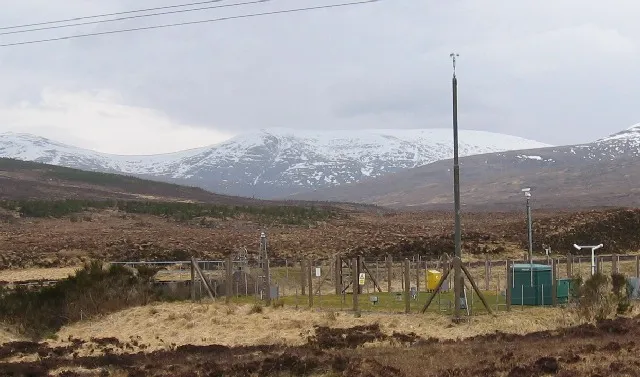
Photo: Stuart Meek, CC BY-SA 2.0, via Wikimedia Commons
Weather is the quiet character in a lot of UK cases. It rarely gives evidence in the dock, but it can narrow a timeline, contradict a version of events or explain why a search went where it did. The trick for armchair detectives is to treat the sky like any other witness: useful, fallible and easy to over-interpret.
Why weather evidence is seductive — and slippery
A rainfall record feels objective. A frost date feels factual. But weather is local, messy and often recorded miles from the street corner that matters. The Met Office archives are a brilliant resource, yet they are not a magic CCTV reel of the sky. Station data can tell you what a particular site recorded at a particular hour; it cannot always tell you whether a pavement was icy, a lane was flooded or a garden was dry. Microclimates matter. So do observation times, quality flags and the difference between a forecast and what actually happened.
That is why weather evidence works best as a supporting witness. It can make a story more or less plausible. It can send investigators back to the map. It can expose a claim that sounds neat until you check the conditions. It should not, on its own, turn an armchair theory into a verdict.
1. The A6 murder (1961)
The A6 case is remembered for a car on a verge, a disputed account and a legal history that still gets argued over. Weather records are not the headline. They are the kind of background detail that can be used to test whether a claimed journey fits the night. The lesson here is not that the sky solves a case; it is that weather can act as a background check on a story. If someone says they walked a certain route at a certain time, the conditions are one more thing to compare with the record — carefully, and without pretending a rain gauge can read minds.
2. The Moors Murders (1963–65)
The searches on Saddleworth Moor were shaped by the ground as much as by the testimony. Rain, peat, frost and poor visibility affected where police could look and how quickly they could work. Weather did not become a witness in the courtroom sense, but it became part of the investigation's geography. For armchair readers, the takeaway is useful: weather can explain gaps in a search without proving anything about guilt. Moorland conditions are not a moral compass. They are a physical constraint.
3. Joanna Yeates (2010)
The Bristol cold snap of December 2010 put snow and ice into the background of a case that already had CCTV, phone records and a tight urban timeline. Weather context can help frame movements: what was on the ground, how dark it was, whether a route would have been busy or quiet. But snow is a double-edged witness. It can preserve a mark or destroy a trace. It can make a journey memorable or make everyone's account sound vague. The Joanna Yeates case is a reminder that weather belongs in the timeline discussion, not in the place of evidence.
4. April Jones (2012)
The search for April Jones in Machynlleth was a huge operation in difficult conditions. Rain and river levels affected where search teams could go and how quickly they could cover ground. In cases like this, weather is less about a single dramatic clue and more about resource planning. It tells you why some areas were searched first, why some were inaccessible and why the public should be cautious about saying a search was late or badly aimed. Armchair detectives often underestimate how much weather shapes the practical map.
5. Nicola Bulley (2023)
The Nicola Bulley case became a lightning rod for online theorising, and river conditions were part of the public debate. Rainfall, water levels and the behaviour of a cold river are technical subjects. They are not personality tests. The case is a good example of why weather and hydrology need expert context: a viewer can see water on a screen and imagine all sorts of things, but the actual conditions involve flow rates, temperature, silt, obstructions and search technique. Weather can be a witness, but it needs an interpreter.
6. The Soham murders (2002)
Weather records were not the headline evidence in the Soham investigation, but the night's conditions formed part of the wider background to the timeline. That is how weather usually appears in major cases: not as a smoking gun, but as one more layer against which movements and accounts can be checked. The important word is checked. A weather record can support a question. It cannot cross-examine a suspect.
How to read the archives without overclaiming
Start with a precise question. Were you trying to establish whether it was raining at 11pm in one postcode, or whether the whole region had a wet week? Those are different queries. Pull hourly observations where possible, note the station's distance from the scene and check the quality flags. Compare more than one source. Distinguish between a forecast issued before the event and an observation recorded during it. Ask what the record cannot tell you. A dry station five miles away does not prove a dry garden. A frost warning does not prove a particular pavement was lethal.
Then apply the armchair rule: does the weather detail actually change the timeline, or does it just make your theory feel more cinematic? If it only adds atmosphere, say so. If it genuinely narrows a window, explain the limits. That is how you use the sky as a witness without asking it to commit perjury.
The takeaway
Weather evidence is at its best when it is boring, specific and modest. It can confirm that a night was cold, a road was wet or a search area was underwater. It cannot tell you who did what. The UK has a rich weather archive and a long history of cases where conditions mattered. The armchair detective's job is to read the record carefully, keep the caveats visible and resist the urge to turn a rain gauge into a judge.